
Understand. Leading. Navigating.
Dr. Nancy Hayden transforms every setting, whether an intimate university classroom, a high-level government or industry gathering, or a community forum, into a dynamic exchange of ideas. Whether it be a keynote, a fireside chat, or a panel discussion, she focuses on three areas: understanding, leading, and navigating.
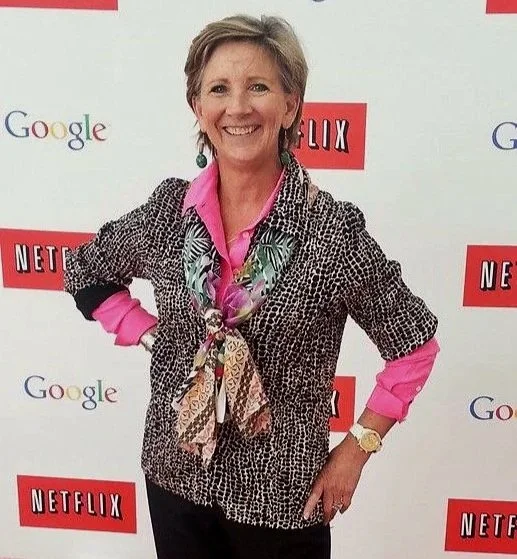
Speaking
Inspiring attendees to anticipate trends, evaluate risks, and engage in meaningful dialogue, I offer insights into what it means to bring your whole self to demanding, consequential professional situations that must bridge diverse interests and agendas. Individuals leave with fresh perspectives for identifying unexpected patterns and with hope and guidance to move forward.
Speaking topics
-
The problems that seem most intractable, AI governance, nuclear risk, civil conflict, and geopolitical risk, are not problems of insufficient information but problems of insufficient frameworks. Conventional analysis sees the pieces and parts, while complexity science sees the whole system—the feedback loops, tipping points, and emergent behavior that no one intended and no linear model predicted. In keynotes, I prompt attendees to see into uncertain futures with a complexity science lens and show how to apply it to the problems they face. Audiences leave not just with new information, but with a new pair of glasses.
-
With decades of experience in some of the most sensitive national security environments, I examine what high-stakes leadership really looks like from the inside, on the edge of the known. Not the polished version. The real deal. Audiences leave with a clarity and an understanding of how who they are in the room matters, and what high-stakes leadership makes possible.
-
The technological disruptions that reshape civilization are coming faster and spreading more quickly than ever before. Every disruption follows the same arc. First, there is a signal, visible to those with the right framework—the flash. Then, there’s a period of apparent calm, the window when action is still possible—the pause. Then, the consequences come when the window closes—the shockwave. Most organizations waste the pause in denial, distraction, or waiting for certainty that never arrives. My keynotes offer a different approach: recognizing the flash for what it is, understanding what the pause demands, and moving with confidence before the shockwave hits. No matter the challenge, the framework holds for every domain. Audiences leave knowing how to read the signals, use the pause, and act with strategic clarity in an uncertain future.
Firesides
Blending authenticity and problem-solving experience with storytelling, Dr. Hayden shifts between technical depth and the human perspective, diving into the realities we face, from AI and space security to civil conflict and climate change, as well as the future we’re navigating. Participants leave with questions they hadn’t known to ask and frameworks for understanding and responding to today’s world.
Chat topics
-
A conversation about developing different perspectives to transform how we understand reality. We shift between the philosophy of what is, the architecture of complexity science, and the visceral: the moment you realize that the advanced systems you are building for the future may keep creating the very conditions they are meant to prevent; or that an AI system may come up with the best solutions for reasons nobody can explain; or that the patterns that explain your world may mean something entirely different than you thought. I provide the framework, and audience members share their own examples. Together, we identify what traditional analysis missed and the next steps to take.
-
A conversation about leadership as it occurs in real life, in rooms where the stakes are high, the playbook has run out, and who you are matters as much as what you know. This format creates space for the big questions people sometimes face—trust across impossible divides, integrity when the pressure is personal, and what it costs to build something that outlasts you. While I bring the stories, the framework, and a willingness to go wherever the conversation needs to go, the audience’s questions drive the depth of the discussion.
-
A conversation about the moment we’re collectively living in and what to do with it. We’ve seen the flash—transformative AI, a democratized and contested space, climate change, and geopolitical conflicts reshaping the global order. We are in the pause before the collective shockwaves fully arrive. This format lets us work through strategies together in real time, from the audience’s positions. What the signals mean, what the pause requires of us, and how we can move before the window closes. Current events are welcome. Uncertainty is the starting point, not the obstacle. Participants leave with strategic clarity for an uncertain future.
Panels
Providing a complexity science lens to global security, technology development and deployment, policy, and the human systems that connect them, I move across fields, acting as a bridge between diverse worlds. I help panelists and attendees discover shared meaning and foster emergent knowledge.
Range of topics
-
How complexity science reveals what conventional analysis misses across AI governance, national security, and civil conflict.
-
What high-stakes leadership looks like when the playbook runs out, and the room is divided.
-
How organizations and individuals find strategic clarity in the pause between disruption and consequence.
Dr. Hayden’s observations and conversations address five questions that run through all the complex challenges she has faced. These are asked, no matter the room, the crises, or the decade, across nuclear safety, nuclear waste governance, arms control, counterterrorism, civil conflict, AI governance, space security, and peace engineering.